
5 Lessons I Learned While Building My Website
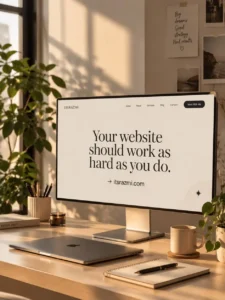
When I first decided to build my portfolio website, I had a very cinematic vision. I’d design a beautiful layout in Figma, recreate it in WordPress, click Publish, and spend the rest of the day admiring my masterpiece. Simple. Fast. Stress-free. …or so I thought. Instead, I discovered that building a website is a lot like assembling furniture without reading the instructions. Everything seems to make sense until you’re left with three mysterious screws and a chair that somehow became a table.
My portfolio wasn’t built in one sitting. It was built through countless Google searches, YouTube tutorials, accidental discoveries, moments of pure confusion, and a surprising number of conversations with my laptop that it never answered. Looking back, I realized I didn’t just build a website. I collected stories. And here are five of my favorites.
lesson 1 : your first design will probably make you laugh later
When I opened Figma for the first time, I felt like a professional designer. That confidence lasted for approximately… five minutes. I added shapes. Changed colors. Moved text around. Zoomed in. Zoomed out. Stared at the screen like inspiration was going to knock on my window. Somehow, everything looked beautiful in my imagination but slightly questionable on the actual screen. Every time I thought, “This looks amazing,” I’d come back the next day and immediately think, “Who designed this?” Turns out… It was me. The funniest part is that I redesigned my homepage more times than I changed my phone wallpaper. Eventually I stopped chasing perfection and started chasing improvement. That small mindset shift made everything easier.
Lesson 2 : Elementor has a secret mission to test my patience
If Elementor were a person, we’d have a very complicated friendship. Some days it was incredibly helpful. Other days it looked at my perfectly aligned section and silently whispered, “Let’s see how patient you really are.” I’d move one container. Another section would suddenly decide it wanted personal space. I’d fix the spacing. The button would shift. I’d fix the button. The image would somehow become the main character. The preview page became my biggest plot twist. Inside the editor, everything looked perfect. Open Preview… Different website. Different universe. At one point I genuinely wondered if Elementor had two personalities. But after enough experimenting, I stopped panicking every time something moved. Now I simply say, Okay… what are we fixing today?”
Lesson 3: Google and YouTube Officially Became My Study Partners
If someone ever sees my search history, they’ll probably think I was trying to solve world hunger. Instead, it was mostly things like: “Why is my menu not working?” Why won’t this image stay where I put it? “How do I center literally anything?” “Why does Preview hate me?” “How many tutorials does one person need?” Every answer led to another question. Every tutorial introduced three new terms I hadn’t heard before. It felt like climbing a staircase that kept adding extra steps. But something interesting happened. The questions slowly changed. Instead of searching, “What is Elementor?” I started searching, “How can I improve user experience?” That was the moment I realized I wasn’t just copying tutorials anymore. I was actually learning.
Lesson 4: Tiny Changes Can Cause Surprisingly Big Drama
There’s a dangerous sentence every beginner says. “I’ll just change one small thing.” Famous. Last. Words. I’d increase one font size. Suddenly the spacing disappeared. I’d fix the spacing. Now the alignment looked strange. I’d fix the alignment. The mobile version would quietly start protesting. I’d finally solve everything… …and then notice I accidentally changed something completely unrelated. It’s honestly impressive how one tiny edit can convince an entire website to rethink its life choices. After enough unexpected disasters, I learned something valuable. Never underestimate a “small change.” It’s never just a small change.
Lesson 5: Progress Is More Fun Than Perfection
For a long time, I kept telling myself, “I’ll publish it after I improve one more thing.” Then another thing. Then another. There was always another animation to try. Another font to test. Another color to compare. Another section that suddenly didn’t feel “good enough.” One day I realized something. If I kept waiting for perfection, my portfolio would never exist. So I published it. Was it perfect? Absolutely not. Was I proud of it? Absolutely yes. Because that website wasn’t just a collection of pages. It represented every hour I spent learning something new. Every mistake I fixed. Every tutorial I watched. Every moment I refused to quit.
Final Thoughts Building my portfolio website taught me much more than how to use Figma, WordPress, or Elementor. It taught me patience. It taught me problem-solving. It taught me that Googling something ten times doesn’t make you a bad learner—it makes you someone who’s determined to understand. Most importantly, it taught me that nobody builds an amazing website on the first try. Behind every polished website is someone who accidentally broke the layout, deleted something important, forgot to save their work at least once, and probably questioned all of their life decisions somewhere around midnight. If you’re building your first portfolio, don’t panic when things go wrong. Your button will disappear. Your containers will misbehave. Your preview will betray you. Your Google search history will become a comedy show. And somehow… You’ll still keep going. Because one day you’ll look at your finished website and realize something funny. It isn’t perfect. But neither were you when you started. And that’s exactly why you’re proud of both. So here’s to every beginner who’s ever celebrated fixing a problem without fully understanding how they fixed it. May your Wi-Fi stay strong, your Undo button never fail you, and your containers finally stay where you put them. At least until the next update.